
Alumni News

Gregg M. Cook’s journey began with a childhood defined by a growing sense of independence and a deep connection to the water. Born in Chicago and raised in New Haven, he developed a strong work ethic early on by managing a small boat and mucking stalls. After a brief period in Arizona, his parents sought a more ambitious educational environment, leading him to Cate School. Gregg fondly recalls his time on the Mesa as a period that instilled in him a lifelong love of learning and a deep appreciation for the California coast.
Following his time at Cate, Gregg attended Dartmouth College and the Thayer School of Engineering, and soon thereafter transitioned into the pioneering field of nautical archaeology. Inspired by his father’s involvement with the Institute of Nautical Archaeology (INA), he participated in significant dives, including a 6th-century BC Hellenic wreck in Cyprus in 1968. He eventually rose to become the Chairman of the INA, though he later stepped away from academia to pursue more action-oriented exploration. This led to the founding of ProMare, a non-profit dedicated to technological underwater research. His work there included leading the first unmanned dive to the bottom of the Puerto Rico trench to record rich amphipod life, recovery of heavy water drums produced at a plant in Norway during the German occupation, and launching the Mayflower Autonomous Ship, an AI-piloted three-hulled boat set to recreate the historic Atlantic crossing.
Gregg’s entrepreneurial spirit eventually bridged the gap between maritime exploration and defense contracting. He co-founded Submergence Group and MSubs, companies that design and build sophisticated underwater vehicles and swimmer delivery systems for the Navy SEALs and the Department of Defense. Despite these high-level professional achievements, Gregg found his greatest joy in giving back to the School that shaped him.
On April 12, 2026, Gregg was honored as Cate’s 2026 Distinguished Alumnus. Gregg established a legacy of academic excellence while at Cate and later became a pivotal figure in the School’s leadership and development. As a junior, he won the Harvard Book Prize, awarded to an outstanding student for scholarship. In June 1965, he was awarded the Bausch and Lomb Medal, an honor reserved for students demonstrating outstanding interest and excellence in science and mathematics. He was a member of the Cum Laude Society and enjoyed playing squash and tennis.
Continuing a deep family tradition of supporting education, Gregg has been a primary benefactor of Cate School. Gregg’s extraordinary generosity has shaped Cate in countless ways. Through his leadership as a charter member of the Mesa Association in 1976, a member of the Board of Trustees from 1982-1993, and through transformative gifts to multiple campaigns, Gregg has made a profound investment in the lives of students and faculty.
In partnership with other key supporters, the Cook family spearheaded the construction of Cook House West in 1984 and Cook House East in 1999, forever reshaping the residential landscape of the Mesa. Gregg’s greatest impact comes from strengthening the School’s financial assistance program by establishing two significant scholarship funds that have enabled dozens of students to access Cate’s education over the decades. Gregg’s legacy is woven into the life of the Mesa and will continue to inspire future generations. We are profoundly grateful to Gregg Cook and his family for their vision, which continues to enrich the Cate experience for all.
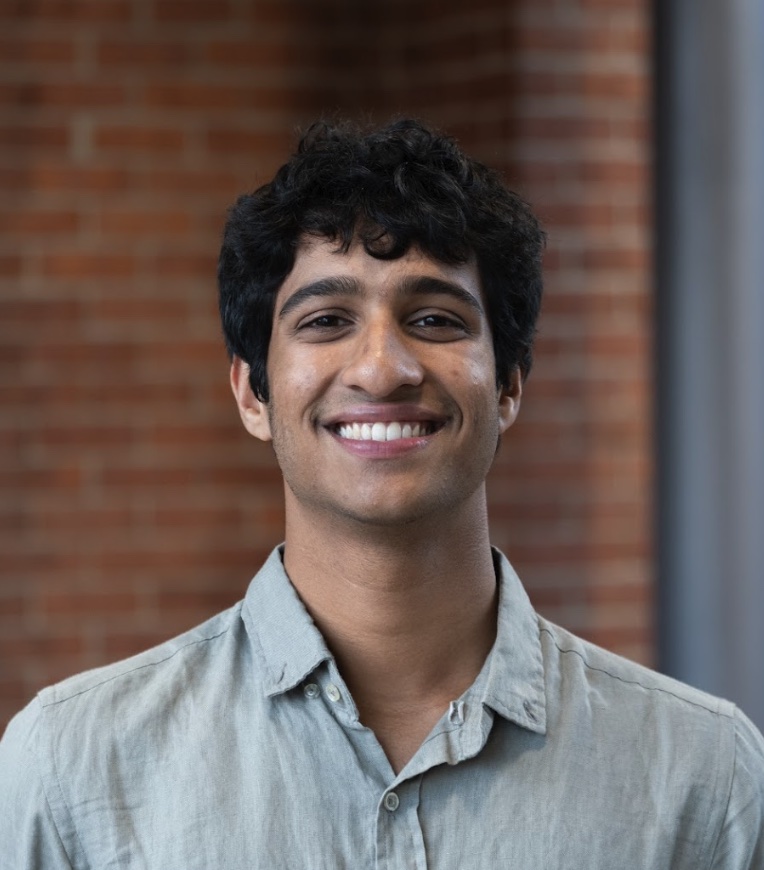
Hailing from the warmth of Saudi Arabia, Shawn Cordeiro ’24 was unaccustomed to the brutal Canadian winter. He vividly recalls an evening in Kingston, Ont., when, despite wearing multiple layers of heavy clothing, the chill left him freezing. As he walked down the street with friends, they came across a person experiencing homelessness, covered in snow. The sight was jarring.”When my friends and I saw him, we all stopped talking and kept walking,” Shawn remembers. Then someone said, “We need to address that; it’s terrible. That can’t happen.”
Already volunteers at local shelters and soup kitchens, Shawn and his four friends decided to pool $50 each to create care packages. When they handed them out, the supplies vanished in five minutes. It was a clear sign: They needed to do more.
The immediate impulse to act speaks directly to Shawn’s character. He possesses a natural warmth and an innate ability to connect with people—traits he actively cultivated on the Mesa. “At Cate, you have to take the first step,” Shawn says. “That is what really helped me come out of my shell. I learned that I need to speak up and advocate for myself and others.”
Shawn carried the school’s ethos of Servons (“Let us serve”) far beyond Cate and onto Queen’s University in Kingston. Now a health science student, he recently co-founded the Kingston Homeless Alliance alongside four peers. Today, the 501(c)(3) nonprofit empowers the unhoused community through compassion, essential care packages, and advocacy.
The Kingston Homeless Alliance has rapidly expanded to include roughly 100 volunteers from various colleges and universities, drawing in students from varsity athletes to engineering society members. Moving beyond immediate relief, the organization also launched an educational campaign in local elementary schools, teaching young children about empathy, housing insecurity, and the importance of caring for their neighbors.
Shawn took his passion for community health and turned it into tangible action, attributing much of his foundational growth to his time at Cate. His advice to current students: “You have to become comfortable talking to anyone and sharing your ideas. Some people are going to say, ‘Cool idea, but I’m not interested.’ You have to be willing to push through if you truly believe in it.”
And that is exactly what he continues to do.
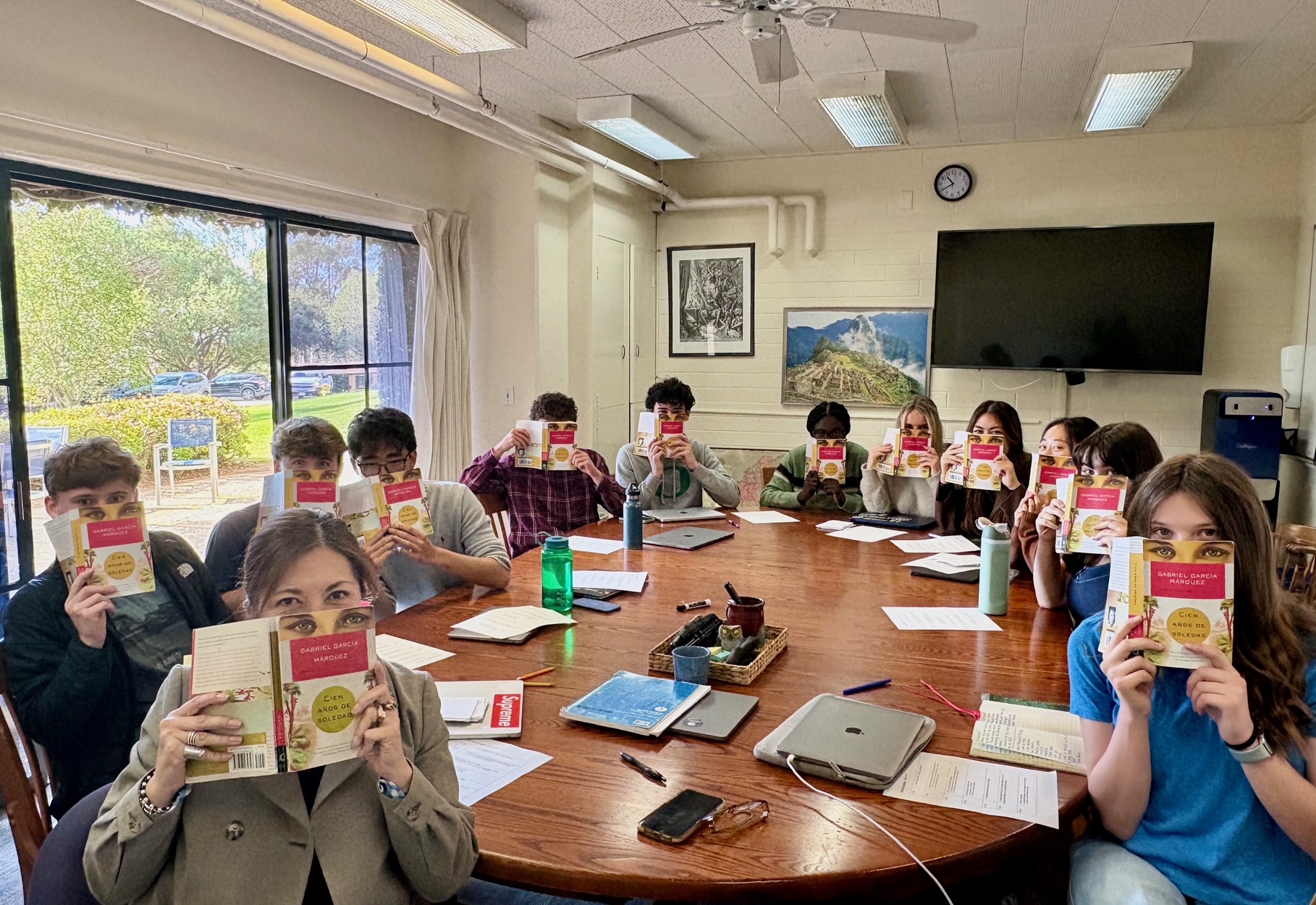 “When we sit at the Harkness Table, there is no place to hide,” shared Monica Garcia-Gamero, Chair of the Modern Languages Department. “We are all here. It is a conversation, and the teacher’s role shifts from lecturer to moderator.”
Monica came to Cate 23 years ago and was captivated by California’s romanticism and the students’ eagerness to learn. “As language teachers, we facilitate the flow rather than control the narrative, allowing students to own their learning,” she said. Cate’s Modern Languages Department is inquiry-based, prioritizing cultural empathy alongside linguistic mechanics. Over time, the program has evolved from simply learning a language to engaging students with diverse perspectives, cultures, and global identities.
Language learning at Cate is enriched by a diverse student body representing 15 nations, which deepens conversations around the Harkness Table. “The Harkness method fosters deep inquiry, moving away from memorization toward a more sophisticated engagement with the world,” Monica noted. Literature plays a central role, encouraging students to investigate, question, and rethink assumptions. Through close analysis of characters whose lives differ from their own, students develop empathy and often experience transformative realizations.
Students further deepen their understanding through podcasts, digital storytelling, and inquiry projects. A recent French class, for example, produced scholarly articles responding to Cate’s guiding question, What is Power?—demonstrating advanced proficiency of language, syntax, context, and culture.
In addition to Monica, Cate’s Modern Languages Department includes seven instructors teaching Spanish, French, Japanese, and Chinese: Nuria Causera, Benjamin Cherel, Andrew Glassco, Ichiko Kido, Monica Lee, Song Ge, and Oscar Urizar. “We share a sense of purpose, openness, and collective responsibility for student learning,” Monica said. Whether through university study, international careers, or global literacy, language at Cate opens doors to a lifetime of opportunity.
Cate welcomes stories from alumni about how learning a new language enriched their lives. Please share yours at monica_garciagamero@cate.org.
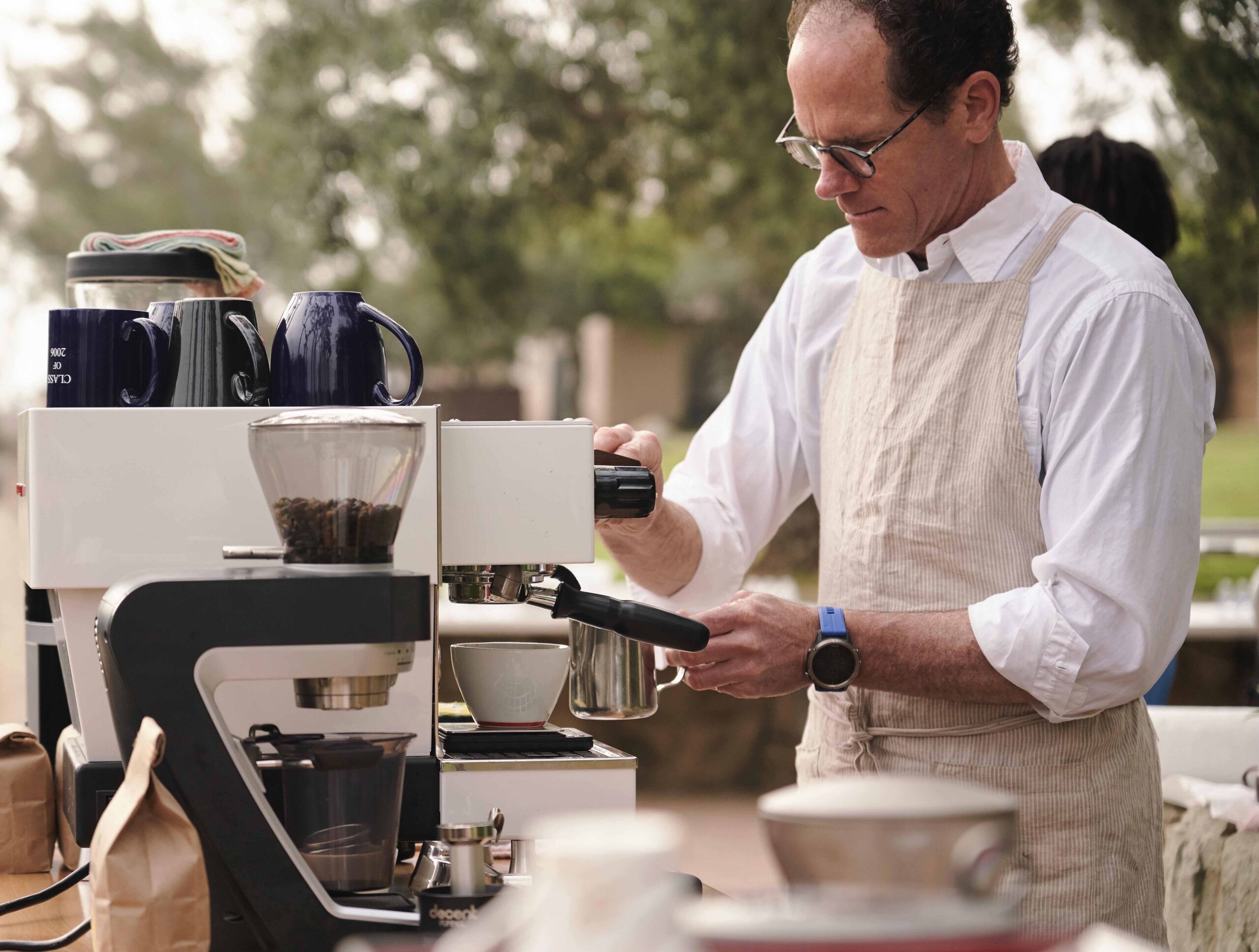 At Cate School, coffee is more than a morning pick-me-up. For many faculty, staff, students, and families, it’s a ritual, a comfort, and a nice way to spark connection. That culture of shared caffeine is what ultimately gave rise to the Wood Coffee Cart — a popular pop-up on the Mesa.
The idea originated years ago with David Wood, a former Japanese instructor and soccer coach at Cate, who inherited a small espresso machine from a colleague heading out on sabbatical. After having the coffee maker for a while, David thought he might as well use it, so he started researching coffee and delved deeper into the craft. He began making coffee for a handful of colleagues. Eventually, he upgraded his starter machine to a more advanced setup with grinders and accessories, but that still couldn’t support more than five to six people. Wood upgraded again and passed on his old machine to science instructor and coffee enthusiast Dr. Jamie Kellogg, and the two began brainstorming. “What can we do with two machines?” they wondered. Their answer: make coffee for the community.
David and Jamie began staging a pop-up coffee station across campus — at post-Outings gatherings, Camp Cate, and Family Weekends. The process was a bit demanding; they had to haul heavy machines and equipment across campus and set up tables. The pair eventually began researching carts to make the coffee operation more mobile. That search led them to art instructor John Swain.
John agreed to build a cart from scratch in 2021. True to Cate tradition, he constructed a coffee cart entirely from reclaimed campus wood: redwood benches from Fleischmann Gym served as the frame, slats made from the stone pine that once stood over Commencement Lawn, and a countertop fashioned from the desk of former Admission Director Noah Hotchkiss. Visual Arts Department Chair Joy Doyle designed the “Wood Coffee” sign. In fact, Joy and John convinced David that the name on the sign referred to the wood used for the cart, not him, knowing David would resist any attention. However, the sign indeed honors the “generous godfather of specialty coffee at Cate School — David Wood.”
When David retired in 2022, he left behind a professional-grade grinder to support larger community serving days. A Cate parent soon followed and donated an espresso machine, hoping the project would help their student build new social connections on campus.
Today, the Wood Coffee Cart is a well-loved fixture, serving as an informal hub for faculty, students, and families. What began as a coffee routine for two esteemed colleagues has become a durable community builder. Jamie is now the driving force behind the coffee cart’s ongoing success, teaching students to master the art of a good espresso. “It just makes people happy to get a cup of coffee,” Jamie said. “It’s a wonderful and simple way to build community. When we say, ‘Come by the Wood Coffee cart and say hello,’ people do.”
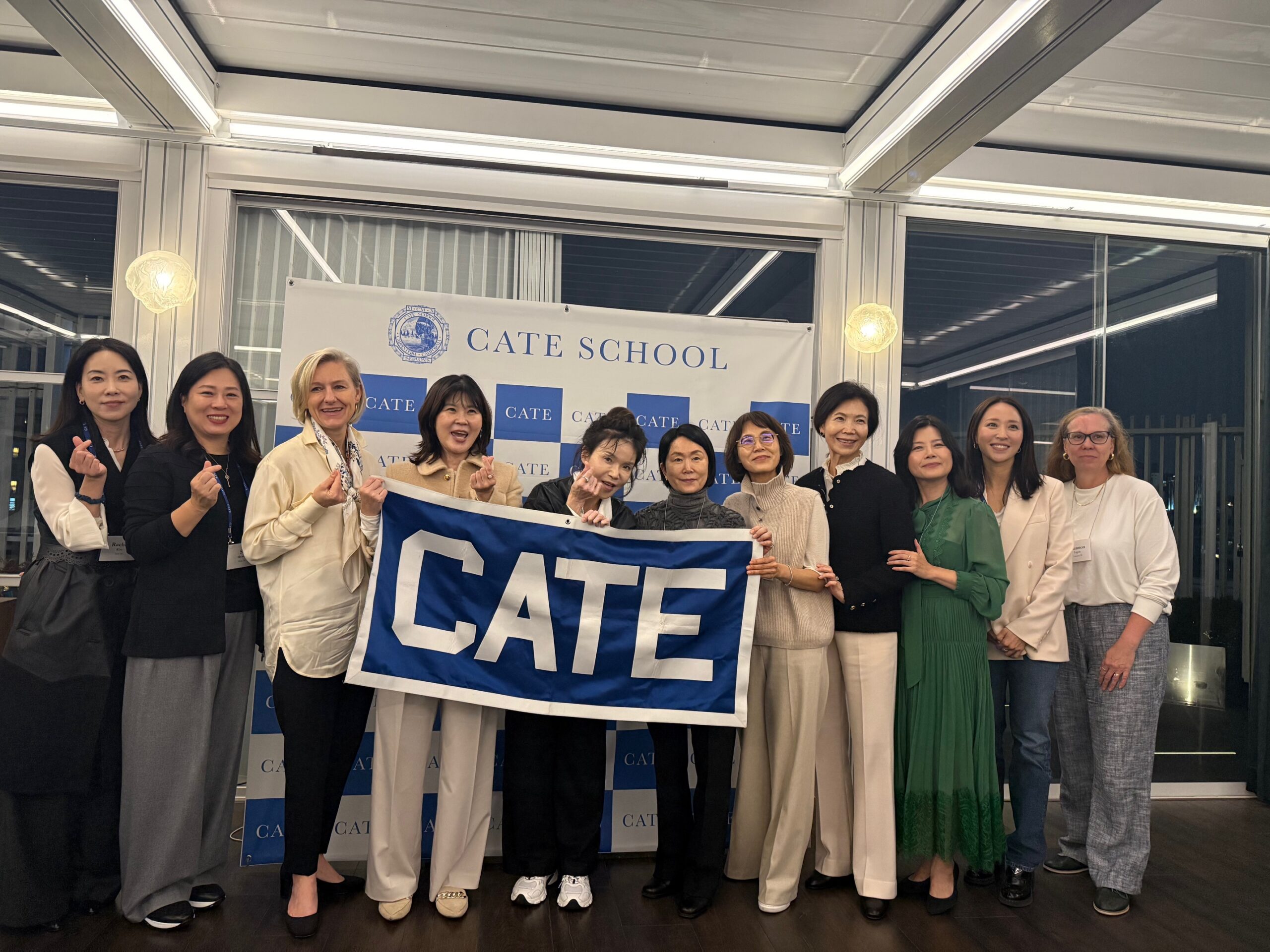 Samhwahoe, the Korean Moms Group, has served as a community network for Cate’s Korean families since 2010. Members meet every three months on the third Tuesday, hence the name. Today, approximately forty mothers of current Cate students and alumni are part of the network, and over a dozen moms gather regularly to connect, share meals, and receive Cate updates. The network was formed to strengthen ties among Korean families who have students at Cate, and the group collects modest annual dues, donating a portion to Cate through the Korean Alumni and Parents Faculty Fund.
Last November, Head of School Alexandra Lockett and Head of Advancement Andrew MacDonnell traveled to Seoul to foster connections and strengthen relationships with Korean families. For members of Samhwahoe, Cate’s visits to Seoul are essential — they reinforce a sense of belonging for families living far from the U.S. and offer prospective students a personal glimpse of Cate’s warm, California-rooted spirit.
Highlights from the visit included a framed Cate banner displayed at this year’s Seoul reception, which dates back to visits by former Head of School Ben Williams. After a six-year pause, this year’s gathering revived the tradition. The jars of honey harvested at the School and carried across the country were also a gesture that felt deeply meaningful to families in Seoul. Some parents who received this gift said it felt almost too special to eat. The Korean Moms Group is committed far beyond the Cate campus: through a registered nonprofit, Mojahoe, members support multicultural youth in Korea with meal programs and culture-sharing initiatives. If you would like to learn more about the Korean Moms Group, please contact Seungkyong Hwang at skinseoul@yahoo.co.kr.