
English Teachers Step Into the Shoes of Their Students
October 24, 2025
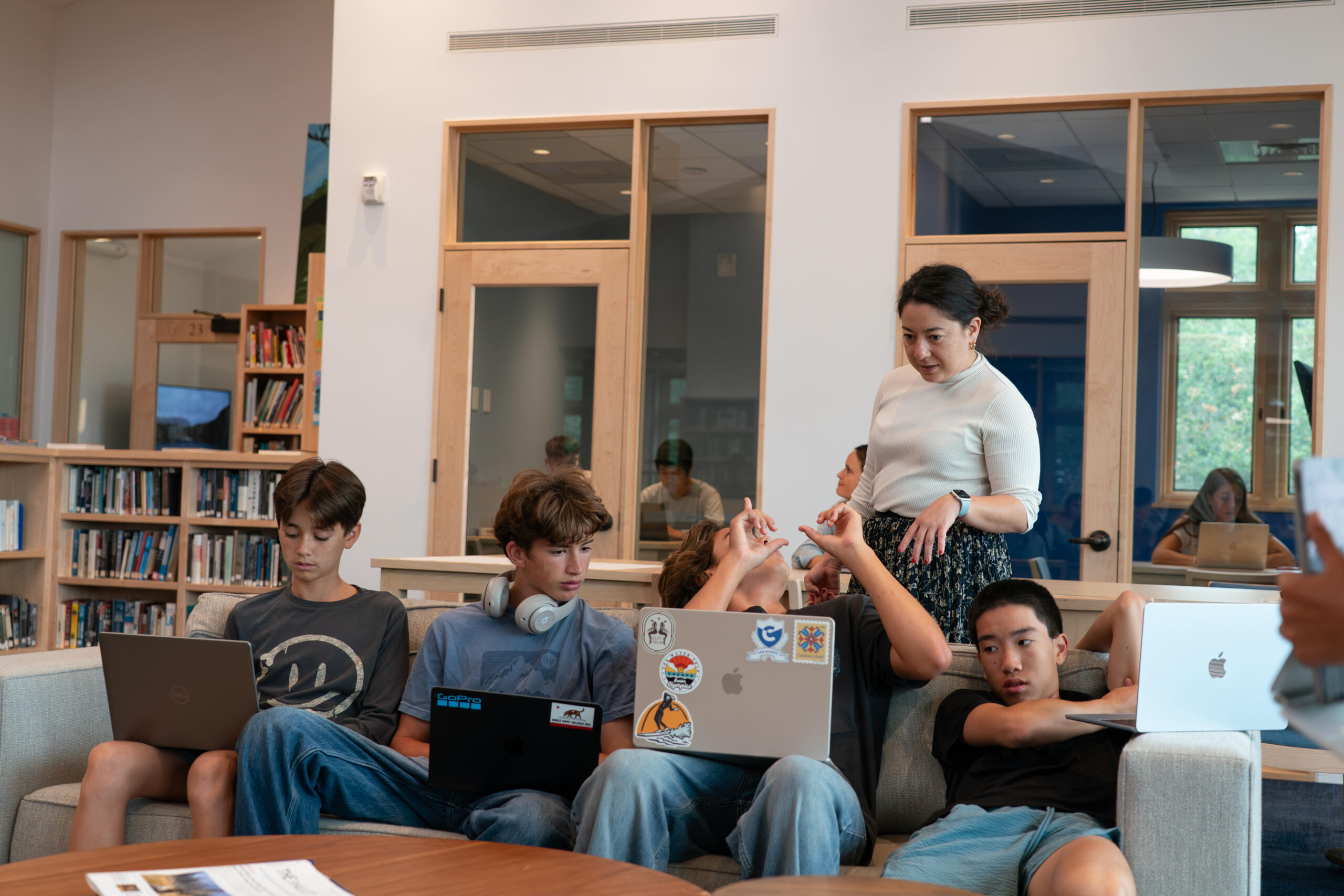 At Cate, we know that exceptional teaching begins with a deep understanding of the student experience. This year, Cate’s English Department has launched a student-shadowing initiative inspired by Stanford University’s Shadow a Student Challenge, a design-thinking project that invites educators to take a “crash course in empathy” by stepping into a student’s shoes for a full day. Teachers Dr. Nicole Sintetos and Michael Szanyi adapted Stanford’s protocol to better fit our own pedagogical priorities at Cate. Between September and December, every English teacher is to shadow one student from morning classes through meetings, meals, and afternoon commitments to observe how students move through the intellectual, emotional, and social landscape of a Cate day. Afterward, the shadowing teacher completes a structured reflection, mapping the cognitive and emotional arc of the day and noting moments that support or strain attention, curiosity, and well-being.
The student shadowing initiative allows teachers to witness what students often carry silently: the flow of transitions, the cumulative weight of assignments across disciplines, and the subtle ways that time, energy, and environment shape attention. By living a school day as our students do, we hope to sharpen our sense of when curiosity flourishes, when it falters, and what conditions help it take root.
“I so strongly believe in day-long student shadows because the boundaries between our various disciplines are much more malleable than we think,” shared Dr. Sintetos. “A discussion in English 10 around a character’s response to failure might unintentionally surface again in a science class later in the day. Such a model forces us to consider all the conversations that ricochet in a student’s mind on any certain day, and how to look at a Cate education more holistically. Further, as an educator, I find that some of my best growth moments stem from watching veteran teachers thrive in their own classrooms and borrowing ever-evolving best practices. I tend to leave the day in awe of my colleagues.”
The aim is not sweeping reform, but thoughtful refinement. As English teachers share their findings in department meetings, we will look for opportunities where intentional changes can have a meaningful impact. We expect to consider how to plan for more intentional assignment spacing, develop routines that boost engagement at different times of day, and provide clearer scaffolding to help students transfer skills across disciplines. Through these conversations, we reaffirm Cate’s belief that great teaching is both reflective and relational, rooted in the lived experience of our students.