
Lessons Beyond the Scoreboard
September 17, 2026
A conversation with longtime Cate coach Ben Soto on effort, honesty, leadership, and those who shaped him.
For more than three decades, Coach Ben Soto has taught Cate athletes that the most important lessons in sports are not measured in wins and losses. He began coaching baseball at Cate in 1993 and now leads both the baseball team and Cate’s eight-player football team. With the football team off to a 2–0 start, CommuniCATE sat down with Coach Soto to talk about the coaches who guided him, the standards he sets for students, and the enduring influence of former colleague Eric Pintard.
CommuniCATE: What resonates with you about football?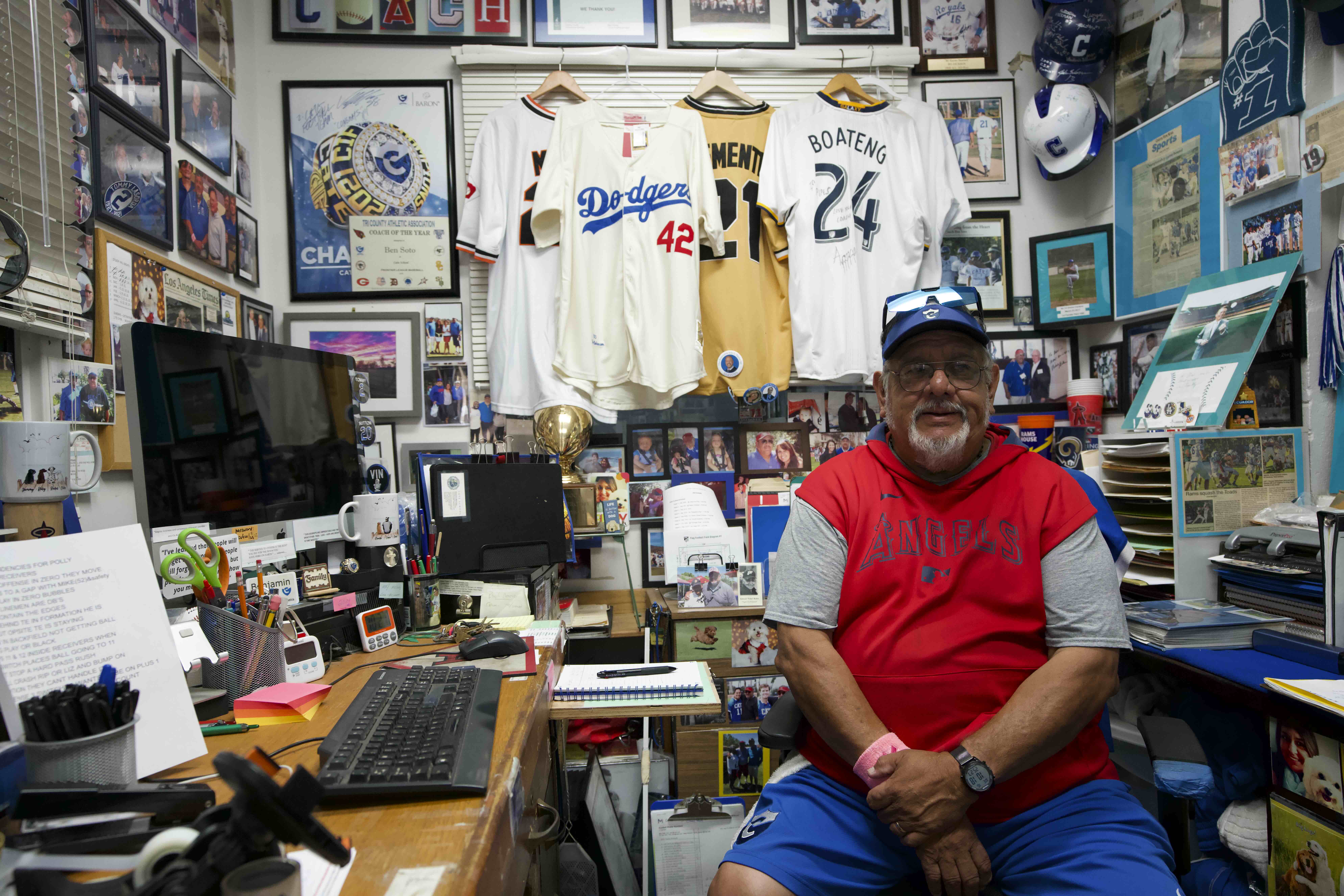
Coach Soto: I like everything the season brings because we are together from August through November. That gives us time to teach. Players have a lot on their minds this time of year, and I tell them from day one: If something is on your mind, let us know. Then we can adjust. We want your best effort. That is all we ask.
CommuniCATE: What is the first lesson you want to impart to a new player?
Coach Soto: I tell the freshmen that I congratulate them for being here. At their age, I could not have done what they are doing.
I tell them to be strong enough to lead, even if they are only a leader of one. Do the right thing, and people will hitch their horse to you. You do not have to be loud about it. Follow the rules and help people around you. If you stand for something positive, people will see it, and they will follow you.
CommuniCATE: What first connected you to baseball?
Coach Soto: I played in high school and then for a short time at Santa Barbara City College. I had no speed, no arm, and I did not hit for power. I did not do anything special. But when more than 100 kids were practicing during the week, I still got picked to suit up for the Saturday games. That showed me something. I was an average player, but I had fun, and I had great coaches. They taught me the sport, but they also taught me lessons that helped me in life.
CommuniCATE: What were some of those lessons?
Coach Soto: When I was a young person, I was looking for people I could respect, listen to, and learn from. My baseball and football coaches taught me more than sports. They taught me how to become a better person, and that helped make me the person I am today. I will be forever grateful. Those coaches were solid pillars for me when I was growing up.
CommuniCATE: After more than 30 years at Cate, is there one experience that helped define you as a coach?
Coach Soto: That is a tough question because there are so many. I can look at every team picture in my office, and each one brings back a memory. At first, I wanted to win. Then I learned that the wins and the losses were not the most important part of teaching athletics. The lessons that come with athletics became what mattered most to me, and no one brought that more clearly to the forefront than Eric Pintard.
CommuniCATE: Tell us about Eric.
Coach Soto: I coached Eric at Carpinteria High School. He went on to play college baseball and later came back to coach with me at Cate for two or three years. He battled brain cancer. At one point, doctors gave him six months, but he fought for seven years. He would come to practice with one eye closed because of the tumor. I would say, ‘Eric, go home,’ and he would tell me, ‘No, this is my therapy. I need to be out here—one eye and all.’
CommuniCATE: How did his example change the way you coach?
Coach Soto: Eric reminded me that it is not the W’s or the L’s. It is making every kid feel important. You are not their favorite uncle, and you cannot let them get away with everything. But you teach them in a way that helps them in the game of life. Thirty-three years later, I still see former players in town who tell me, ‘I’m a better person, a better parent, a better worker, or a better teammate because of what you taught us through athletics.’ To me, that is worth more than a ring. The ring is nice, do not get me wrong. I have coached in five CIF championship games. But those life lessons are far more important to me.
CommuniCATE: Eric also founded Hugs for Cubs. How have Cate teams helped carry that work forward?
Coach Soto: While Eric was going through chemotherapy, he saw young children receiving cancer treatment. He told his dad, ‘What am I crying about? I’m 26. I’ve already had a good life, and these kids are five and six years old.’ He started Hugs for Cubs to support local children and families battling cancer. The program gives them experiences together—trips to Dodgers or Angels games, bowling, surfing, and other activities.
Our players help raise money for these kids. We talk about Servons all the time, but do we live it? Our players are helping people they do not even know. If that is not Servons, I do not know what is.
CommuniCATE: How do you guide students who hope to compete in college?
Coach Soto: We can usually tell if somebody has the talent, the willingness to work, and—most important—the desire to keep playing. We are honest. If a player says, ‘I want to play Division I baseball,’ we will tell them where they are right now and what they still need to do. I also tell my players: If you want the truth, I will give you the truth according to Coach Ben Soto. If you want something sweet, eat a doughnut.
CommuniCATE: What excites you about this year’s football team?
Coach Soto: We are 2–0 with a young team and only one senior starter. Every team has its own personality, and you have to read it, bring it out, and work with it. These players are still figuring themselves out, but they work hard and they listen. I have great assistant coaches who share my beliefs and teach those lessons in their own way. We are all pulling the same rope.
I also tell the players that they are going to experience bumps in the road, and that is what happens in life. You can blame the official or say you did not have this player or that player, but when you point one finger, three are pointing back at you. Do what you can to make it better. Come back and try to be one percent better tomorrow. After a quarterfinal loss in 2016, I took a picture of the sun coming over the Mesa. I told the team, ‘The sun will shine tomorrow.’ It is a game. The sun will shine tomorrow, and you will learn from it.